Sexual wellbeing: an honest guide
A complete guide · Updated 4 July 2026

Sexual wellbeing is less about technique than most of the internet suggests. The World Health Organization frames it as a state of physical, emotional, mental, and social wellbeing in relation to sexuality — which means comfort, communication, and freedom from shame matter as much as anything mechanical.
This guide gathers the quieter, harder-to-search parts of the subject: how to talk and ask well, how to sit with performance anxiety instead of fighting it, how intimacy changes after childbirth, and why treating this as ordinary self-care — not a problem to fix — is the healthiest starting point.
In this guide
Consent and communication
More of intimacy runs on communication than on anything physical, and the skill is quieter than it sounds — asking, listening, and treating consent as a live thread rather than a one-time checkpoint at the start. Couples who do this well have simply made it ordinary rather than formal.
The same muscle powers every smaller conversation, from saying what you like to raising protection without awkwardness. The piece below sits with the heart of it.
Performance anxiety, gently
Performance anxiety is common, self-reinforcing, and almost always made worse by treating it as a problem to defeat. The more useful frame is a gentler one: attention returned to the moment and the person rather than to a private scoreboard. Anxiety tends to loosen its grip when it stops being the thing you're fighting.
When worry is persistent or distressing, it's worth speaking to a doctor or a qualified therapist — this is a common, treatable area of health, not a character flaw.
Intimacy after childbirth
Intimacy after childbirth changes for reasons that are physical, hormonal, and emotional all at once, and the honest advice is to go gently and without a timeline. There's no 'should' about when or how closeness returns; there's only what feels right for both partners, which often means starting with everything that isn't sex.
Dryness is common in this period and a good lubricant helps; anything painful or persistent is worth raising with a doctor at a postnatal check rather than pushing through.
Sexual wellness as ordinary self-care
The healthiest frame for all of this is the least dramatic one: sexual wellness is a normal part of looking after yourself, no more fraught than sleep or nutrition once the shame is set aside. Keep protection on hand so safety is never an afterthought, choose products that suit your body, read reliable sources instead of myths, and see a doctor when something feels off — early rather than late.
Discretion, in this light, isn't secrecy — it's simply privacy, the same privacy you'd want around anything personal. It's a baseline the category owes you, not something to feel odd about wanting.
Common questions
What does sexual wellbeing actually mean?
The World Health Organization describes it as a state of physical, emotional, mental, and social wellbeing in relation to sexuality — which includes comfort, communication, and freedom from shame, not just physical health.
Is performance anxiety common?
Yes, it's common and treatable. It often eases when attention returns to the moment rather than a private scoreboard. Persistent or distressing anxiety is worth discussing with a doctor or qualified therapist.
When does intimacy return after childbirth?
There's no fixed timeline — it changes for physical, hormonal, and emotional reasons at once. Go gently, start with closeness that isn't sex, use a lubricant for common dryness, and raise anything painful or persistent at a postnatal check.
Every piece in this guide
Sources
- Sexual health — health topic — World Health Organization
- Sexually transmitted infections (STIs) — fact sheet — World Health Organization
Considered products
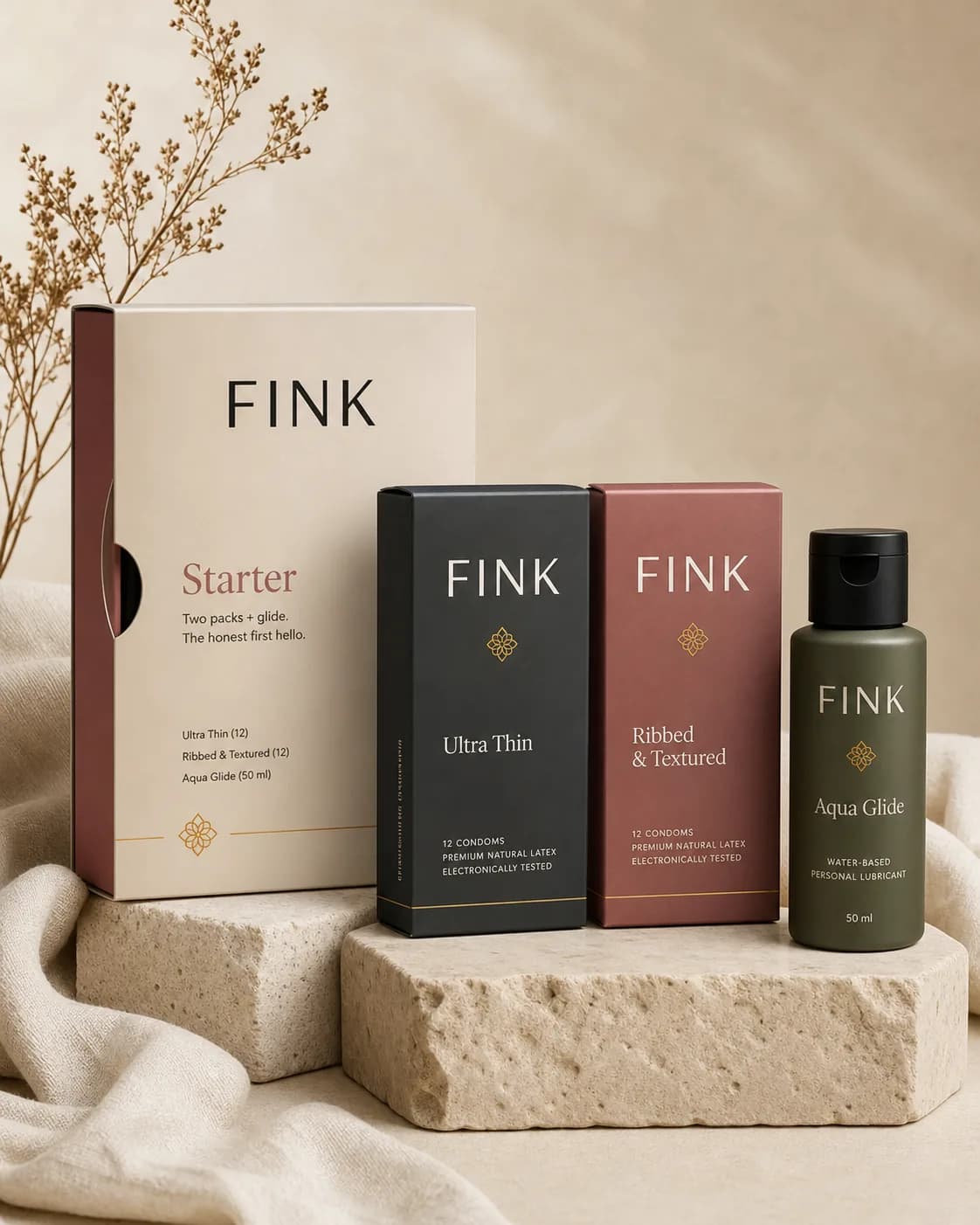
The Starter
Two packs + glide. The honest first hello.
₹ 1,199
₹ 1,497

Aqua Glide
Water-based personal lubricant · 50 ml
₹ 549